
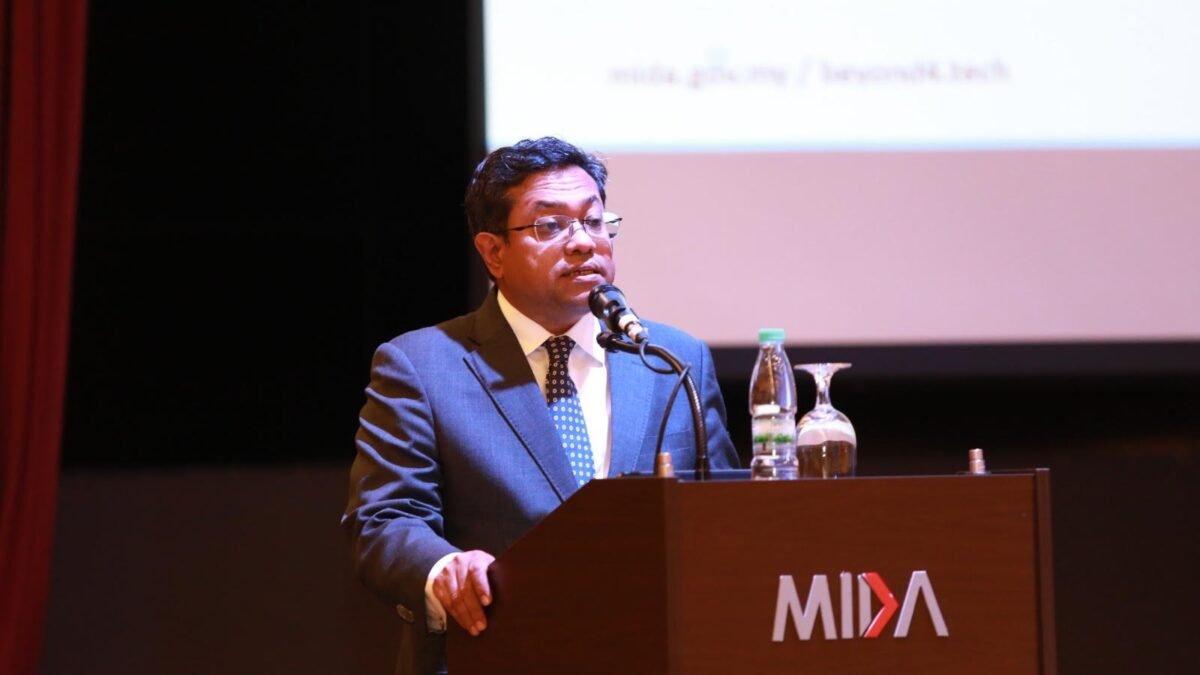
The Sarawak Government officially launched the Sarawak Global Supply Chain and Sourcing Programme 2026 on 29 September 2026 in Kuching, marking the inaugural edition of a structured initiative designed to connect Sarawak-based businesses directly with multinational corporations, anchor companies, and global procurement networks. The two-day programme, held at Pullman Hotel Kuching, was officiated by Deputy Premier Datuk Amar Haji Awang Tengah bin Ali Hasan, who also serves as Sarawak’s Minister for International Trade, Industry and Investment.
The programme drew more than 300 participants and was jointly led by the Ministry of International Trade, Industry and Investment Sarawak (MINTRED) and the Malaysian Investment Development Authority (MIDA), with the Malaysia External Trade Development Corporation (MATRADE), InvestSarawak, the Regional Corridor Development Authority (RECODA), and the Sarawak Digital Economy Corporation (SDEC participating as collaborating agencies.
What the Programme Does and Who It Targets
The programme is structured around four types of sessions: networking forums, knowledge-sharing panels, business matching engagements, and business clinics. Its stated purpose is to give Sarawak enterprises direct access to the procurement requirements of MNCs and anchor companies operating in or investing into the state, identify capability gaps, and establish long-term commercial supplier relationships.
MIDA Chief Executive Officer Datuk Sikh Shamsul Ibrahim Sikh Abdul Majid stated that the focus extends beyond attracting anchor investments: “Through this programme, we are bringing anchor companies and Sarawak-based businesses together to better understand procurement requirements, identify capability gaps, and build stronger business linkages. We want to see more Sarawak companies become suppliers and partners to these investors, strengthen their capabilities, and ultimately position themselves to participate in regional and global supply chains.”
He linked the initiative to MIDA’s #InvestLokal framework, describing it as a means to ensure that inbound investment translates into measurable local industrial capability rather than remaining confined to headline approval figures.
Sarawak’s Investment Position Heading into the Programme
| Indicator | Figure | Period / Source |
|---|---|---|
| Total approved investments (primary, manufacturing, services) | RM116 billion | 2021–2025, MINTRED/MIDA |
| Share from domestic investors | 61% | 2021–2025, MINTRED/MIDA |
| Approved investments, first half of 2026 | RM10.8 billion | H1 2026, MINTRED/MIDA |
| Programme participants | More than 300 | 29–30 September 2026, MINTRED/MIDA |
Source: MIDA media release, 29 September 2026
Strategic Sectors Targeted for Local Supplier Development
The Deputy Premier identified several sectors where local supply chain integration is being actively pursued. These reflect Sarawak’s current investment priorities and where procurement demand from anchor companies is concentrated:
- Advanced manufacturing and semiconductors
- Green energy
- Downstream oil and gas and petrochemicals
- Green metals
- Hydrogen and clean technologies
- Digital economy and artificial intelligence
- Aerospace and precision engineering
- Agriculture and food manufacturing
Local enterprises were specifically encouraged to invest in digital transformation, adopt international standards, and develop workforce capabilities aligned with what global buyers require from suppliers.
Why This Matters for Sarawak’s Industrial Development
Sarawak’s approved investment figures indicate a state that has attracted substantial capital commitments, particularly over the 2021–2025 cycle. The policy challenge — common across Malaysian states receiving large-scale FDI — is ensuring that local businesses capture a meaningful share of the resulting procurement, services, and employment rather than those flows returning to established foreign or peninsular supply chains.
The programme’s design directly addresses this gap. Business matching and procurement clinics give Sarawak SMEs structured access to MNC sourcing teams, which is a practical step beyond general investment promotion. The involvement of RECODA and SDEC alongside MIDA and MATRADE indicates that the initiative is being coordinated across corridor development, digital economy and trade promotion functions simultaneously, rather than being siloed within a single agency.
The emphasis on technology transfer, skills development, and international standards adoption reflects an acknowledgement that supplier readiness — not just opportunity access — is the binding constraint for many Sarawak firms seeking to enter MNC supply chains.
Announced Outcomes and Factors to Watch
The programme’s stated intended outcomes include supplier development, new investment opportunities, technology transfer agreements, and job creation — though no specific targets or timelines for these outcomes were disclosed in the MIDA media release. The programme is described as inaugural, implying future editions are planned, though no confirmed schedule for a second round has been announced.
Key indicators to monitor include the volume and value of supplier agreements concluded through the business matching sessions, whether any participating MNCs make formal local sourcing commitments, and how MIDA and MINTRED report on follow-through in subsequent investment statistics releases. MIDA’s H1 2026 approved investment figure of RM10.8 billion for Sarawak provides a baseline against which the programme’s effect on local industrial linkages can eventually be assessed.